DuPrem Alpaca Farm in France: A Unique Animal Experience
If you’ve ever wondered where you can see alpacas in France or what it’s like to visit an alpaca farm, DuPrem Alpaca Farm offers a very unique experience. I had the chance to meet, walk with, and feed, these adorable animals while learning about how they’re raised and how their fleece is used. Visiting an alpaca farm in France was an experience unlike any other I’ve had and one that any visitor to the region—especially families—would enjoy.
1. DuPrem Alpaca Farm in France: Unique Animal Experiences
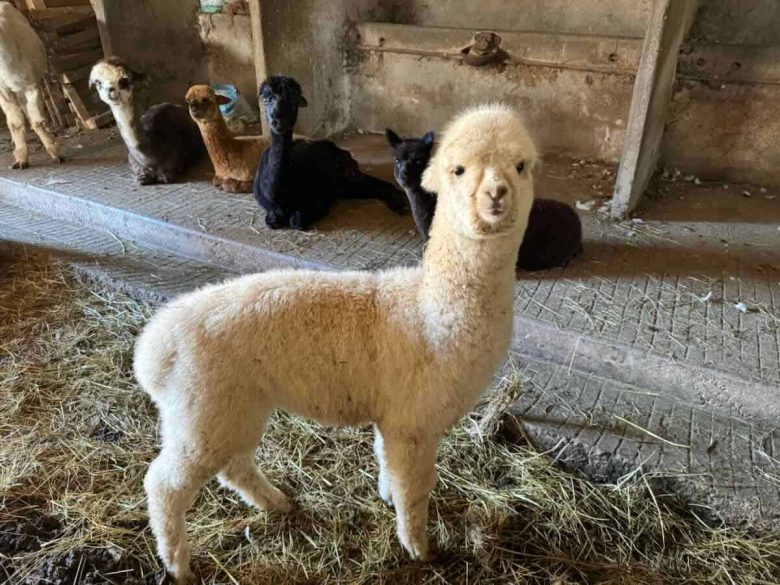
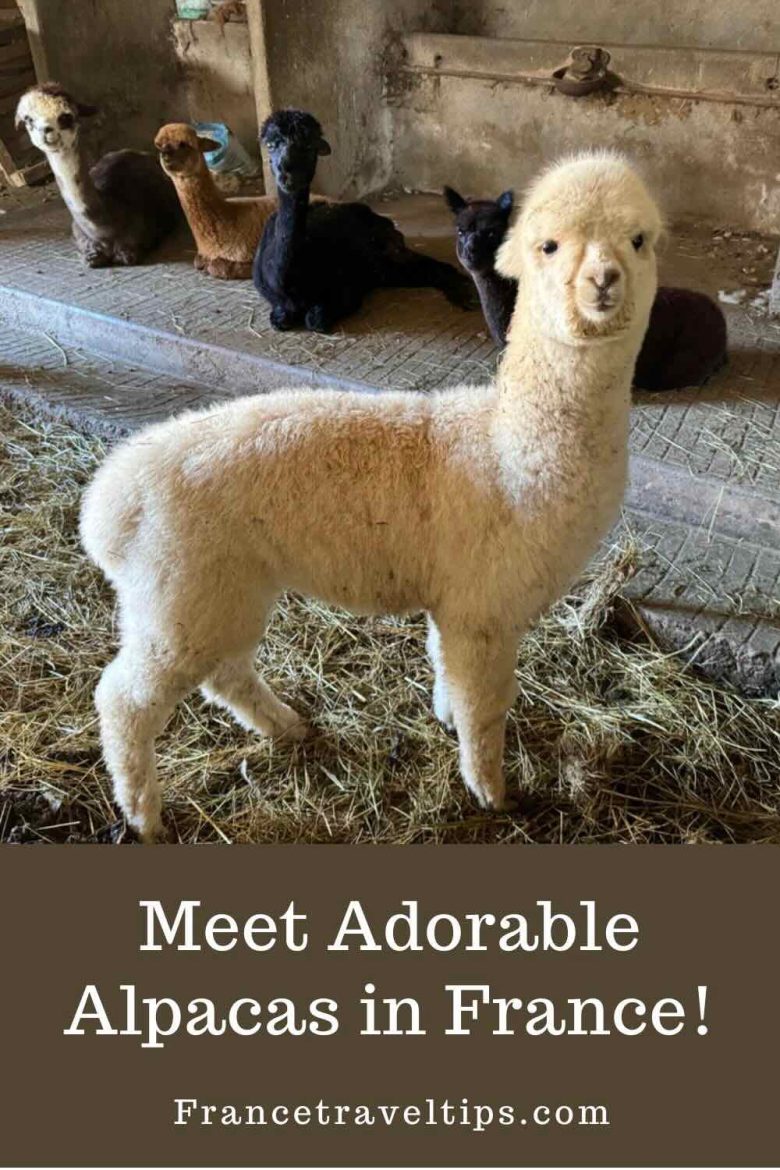
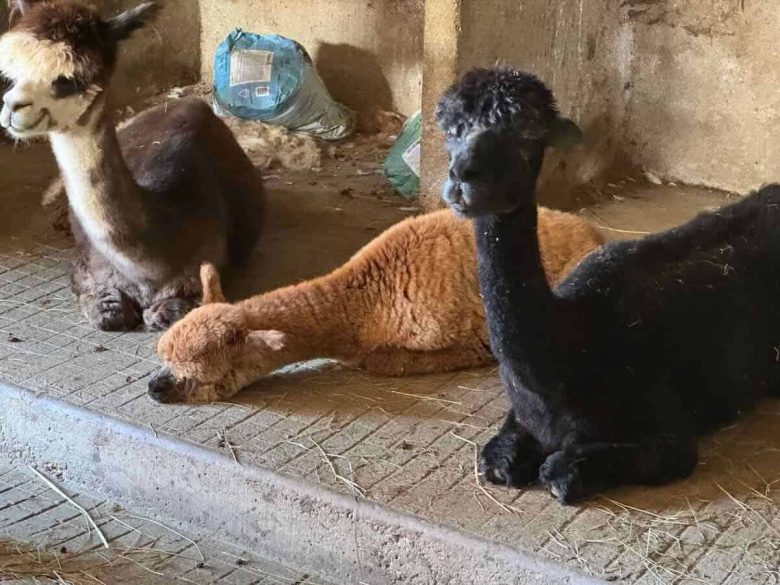
Damien and Paul, the Alpaca Boys, are the caring owners of DuPrem Alpaga [French for alpaca], which is located not far from Villefranche de Rouergue. Paul was my guide who took me on a tour to meet their wonderful herd of 75 alpacas on their farm. I learned about the history of their enterprise and got to meet the adults, teenagers, and baby alpacas and fed a few too!
(a) Originally From The United Kingdom
The backstory is fascinating. Damien and Paul are from the UK. Paul worked for American Express and Damien was a teacher—head of performing arts—-in a high school. They purchased a farm in 2007 and it needed to be renovated. Along with it came farmland (that wasn’t being used), so they started to investigate how they might use the land. Neither had any experience with alpacas before deciding to learn everything about these beautiful, gentle animals—and eventually raise them!
(b) This French Farm Has Alpacas, Not Crops!
The French authorities had no problem that they wanted to move from the UK to France; however, they just didn’t understand their interest setting up a farm to breed alpacas because most farms just had crops, cows, or sheep. They explained that their “crops walked and had 4 legs”! In 2016 they brought over 38 alpacas to their farm in France.
Their 4 hectre farm was the first to be registered as an alpaca farm in the Aveyron. Today, there are over 35 alpaca farmers. Paul told me that during COVID, many Parisians moved south and bought places in the countryside. They started buying alpacas to eat their large areas of grass (so they wouldn’t have to mow it!). While baby alpacas are sold at the farm, Paul and Damien try to keep the herd at about 55-60.
2. What Are Alpacas? How Do They Differ From Llamas?
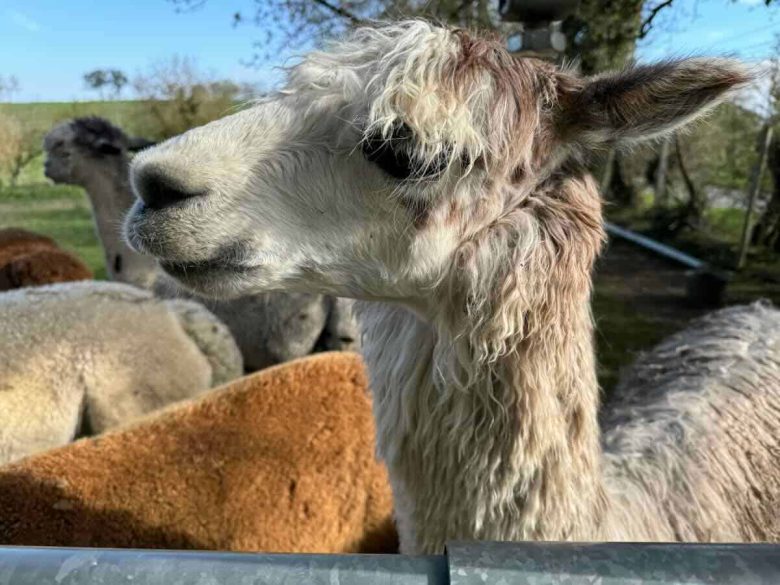
One look at an alpaca and many people say, “Isn’t that a llama?” While alpacas and llamas belong to the same camel family, Camelidae, they have major differences.
(a) Origins
- Alpacas originated in the Andes Mountains of Peru, Chile, Bolivia, and northwest Argentina. llamas came from the central plains of North America.
- Both were domesticated and bred from guanacos, wild camelids native to South America.
(b) Height And Weight
- Alpacas are smaller, shorter, and lighter than llamas.
- The average alpaca stands about 3 feet tall; llamas reach 4 feet. -Llamas weigh over twice that of alpacas (400 lbs vs. 150 lbs).
(c) Face, Teeth, And Ears
- Alpacas have short, compact faces that almost look smushed in, with small, straight ears. They have lower teeth, but no upper teeth, so they won’t bite you when you ffed them.
- llamas have longer faces and distinctive banana-shaped ears and upper and lower teeth.
(d) Personality And Disposition
- Alpacas are calm, gentle and can often be used for therapy. They are sometimes compared to dogs (but don’t bite!). They can spit, but rarely do and if they do, it often means, “keep your distance!”.
- llamas can be more aggressive and will kick, bite, spit and refuse to move if mistreated or overloaded so they are more difficult to work with. [There is actually a term for a llama behaving especially badly—- the “Berserk Llama Syndrome”.]
(e) Fibres/Coats
- Alpacas have a single soft fleece, while llamas have a dual coat with a coarse outer layer.
- At DuPrem, alpacas are sheared once a year in May.
- Alpaca fleece, known as the “Fibre of the Gods,” is exceptionally soft, lightweight, warmer than merino wool, and non-itchy. It’s also water-repellent, hypoallergenic, and fire-resistant.
- Alpacas come in 22 colors, though DuPrem breeds for fiber quality over color. Grey is particularly hard to reproduce.
- There are two fibre types:
- Huacaya – Warmer, fluffy, and silky). It’s said these alpacas resemble teddy bears. Their fibres are ideal for knitted and crocheted clothing and items
- Suri – Silky, long, and better for woven textiles
3. What To Expect On A Tour Of DuPrem Alpaca Farm
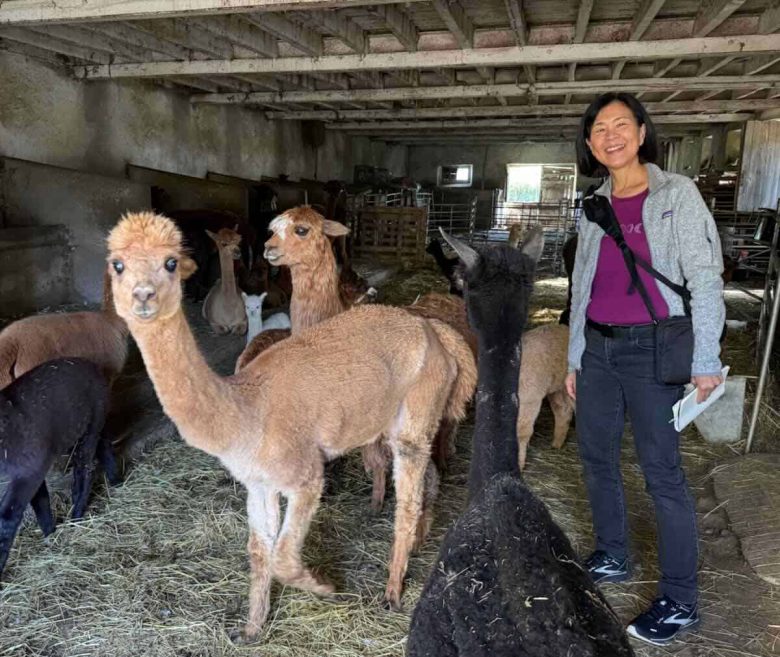
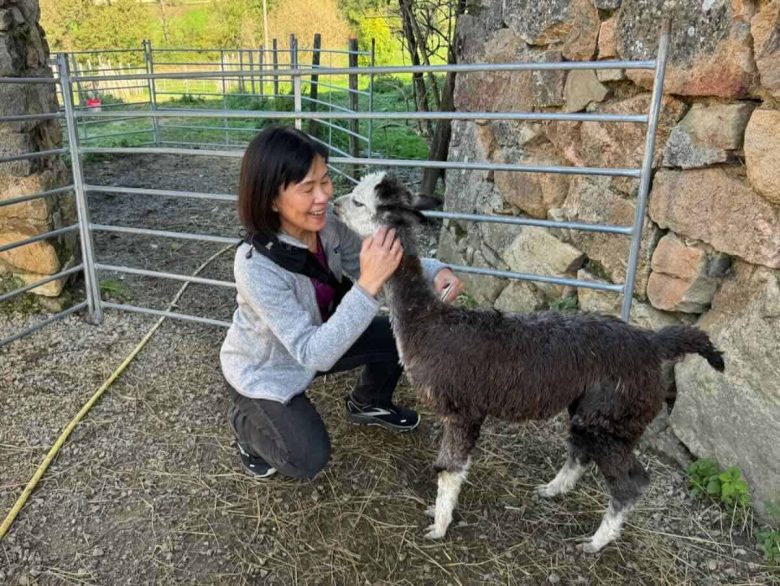
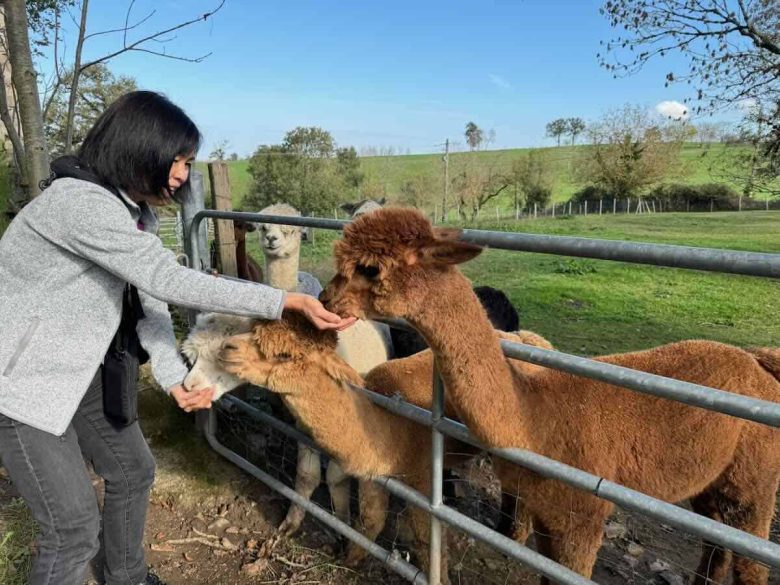
The alpacas seem very happy at DuPrem, scattered across the large pasture with plenty of room to roam. It’s clear they are well cared for, and Paul’s passion for them shines through. He took me to the barn where moms and babies stay, separated from the males—the stud males and adolescent boys. In one photo, I’m with baby Bodie, a Suri alpaca with long fibres.
We then met the adolescent males (2–3 years old), divided into three types:
- Stud males (superior, high-quality fibre)
- Potential studs (kept for three years)
- Pet boys
The alpacas were incredibly cute and gentle when I petted or fed them—no biting since they have no upper teeth! Meeting them was a highlight of my visit to Aveyron.
4. Mothers And Babies
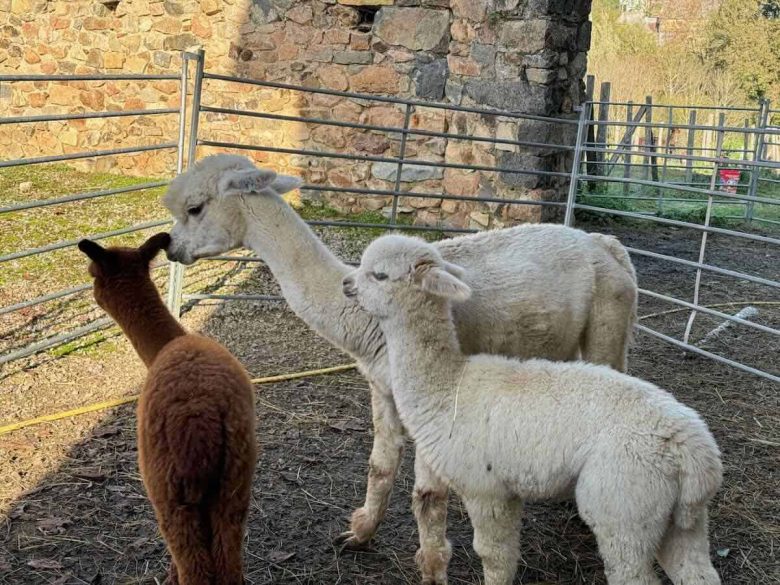
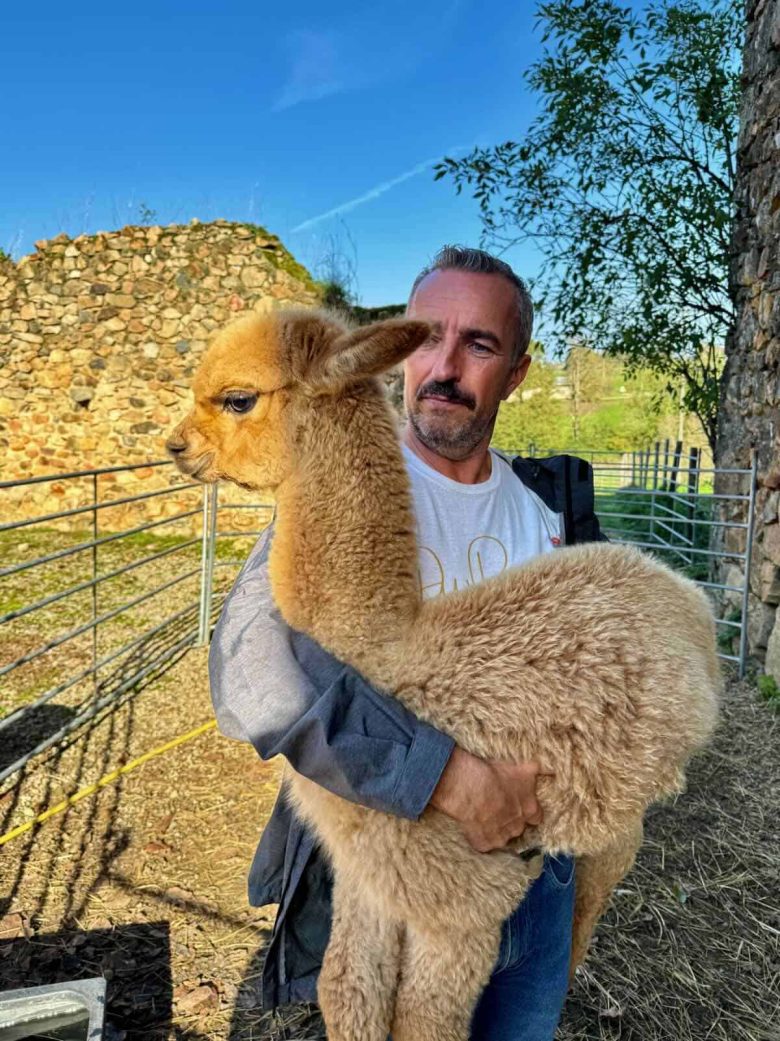
At DuPrem, they have a controlled breeding program. Through “pen mating”, the male is brought to the females who are sitting in the pen. The male makes an orgeling sound that induces ovulation. If the female spits at the male, it means she is ovulating or may be pregnant! The duration of her pregnancy is 11-1/2 months and she will give birth to one baby.
After she has the baby, they wait 2-3 weeks and she starts the breeding process all over again. The female will give birth for the duration of her life, but at DuPrem, it will not be longer than 15 years.
Did you know that alpacas hum to communicate? Yes, this is especially true between mothers and their babies. Alpacas communicate their happiness, their distress, and even their anger by humming!
5. The Business Of Alpaca Fibre
Paul said that sheep’s wool can bring in about $0.50 per kilogram; however, alpaca fibre brings in a minimum of 50-80€ per kilogram, so obviously it can be a very profitable business. Why such a big price difference? It’s all about supply and demand for this eco-friendly, premium natural fibre. There are fewer alpacas, and they are more expensive to shear, spin, and process compared to sheep.
6. DuPrem Boutique And House
(a) Artisan Alpaca Products For Sale
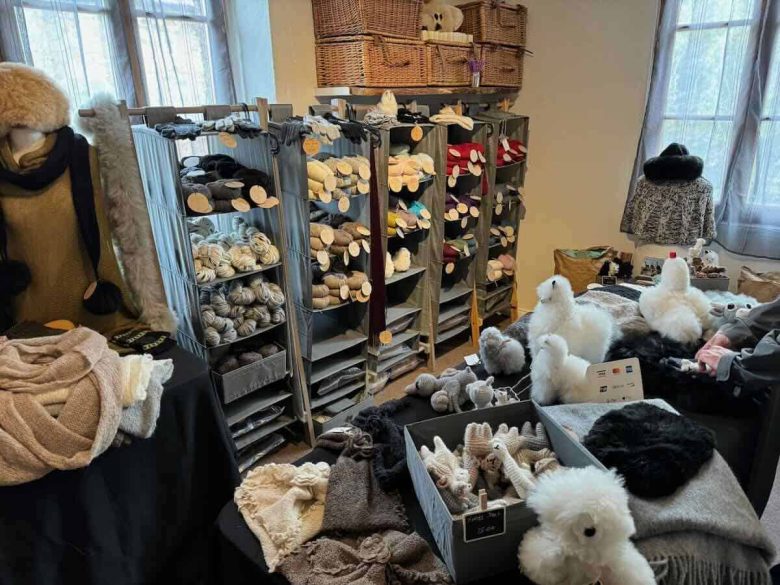
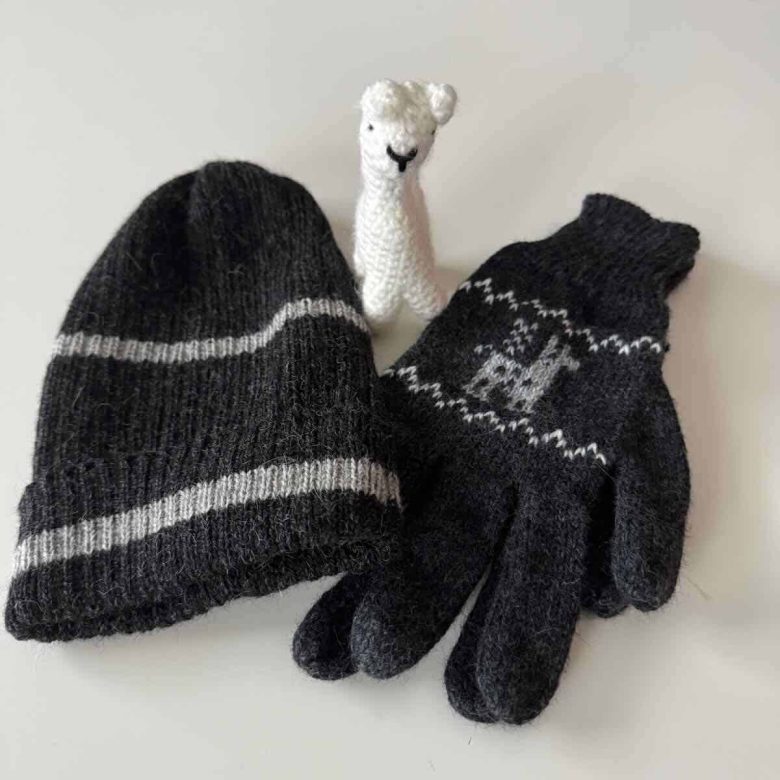
DuPrem’s boutique features handcrafted alpaca products made from their own alpacas. They offer four weights of luxurious yarns, spun, woven, and knitted by Damien and local artisans in natural colors and designs.
The shop carries a variety of items, including stuffed animals, duvets, pillows, hats, mitts, sweaters, shawls, scarves, and warm yet lightweight socks. I picked up a hat, gloves, and an alpaca Christmas tree ornament for my grandniece.
(b) DuPrem B & B
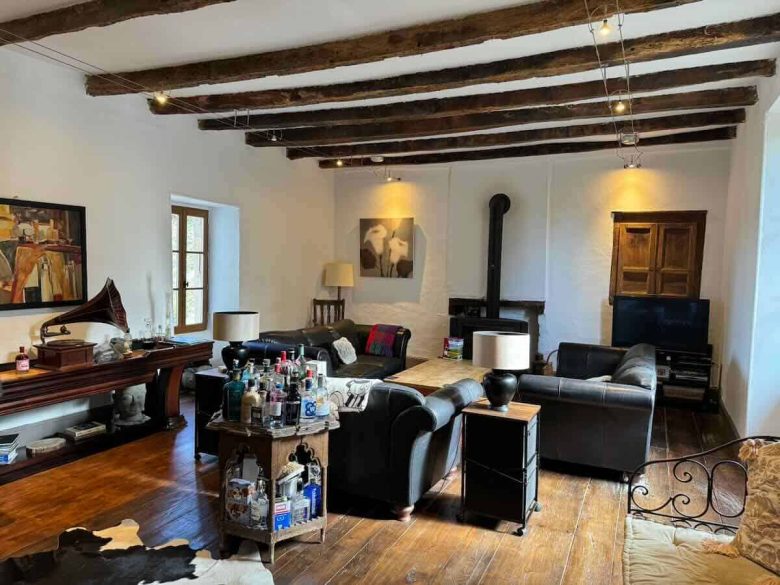
DuPrem’s renovated 17th-century farmhouse offers an adults-only chambre d’hôtes (bed and breakfast) with a heated saltwater pool and hot tub. It sleeps eight across three spacious en-suite rooms. Dinners are available.
7. Where To See Alpacas In France
There are other places in France where you can meet alpacas and, as expected, they are located in the countryside. Alpacas in Paris? You’ll have to go to the Rocher Alpin (Alpine rock) at Jardin d’Acclimatation, located in Bois de Boulogne.
8. Visiting DuPrem Alpaca Farm: Tours
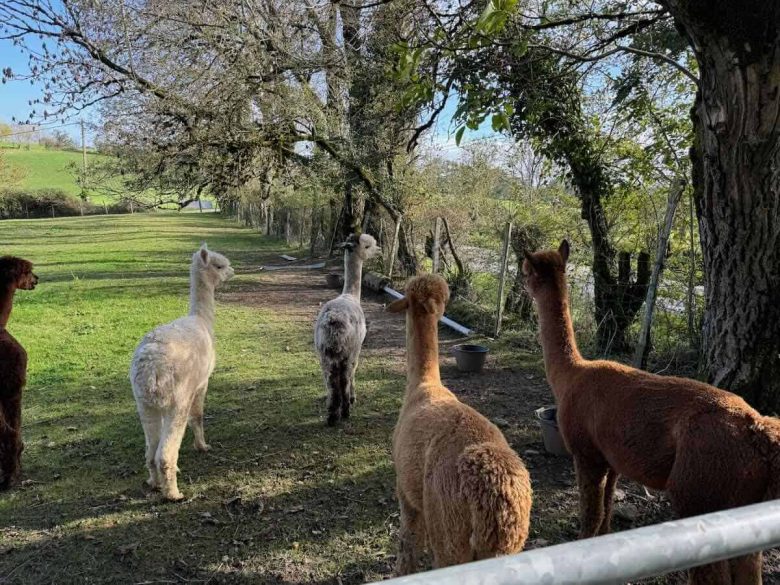
DuPrem has two different tours (in English and French) and in July and August you can arrive without reservations. Do double check the opening days/times especially if you want to visit in the shoulder or off seasons.
(a) Farm tours (1 hour)
- every day at 10:30, 11:30, 14:30, 15:30 and 16:30 every day except Sunday and Thursday morning.
- these 1 hour tours are educational and fun, perfect for adults and children as the alpacas are very gentle.
- cost: 5 € per person
(b) Introduction To Owning Alpacas (full day)
- a more intensive experience where you really learn all about alpacas and their fibre.
- it is particularly applicable for those thinking about raising their own alpacas.
- cost: 45 € per person (includes lunch)
DuPrem Alpaga Stud et Boutique
Address: Le Monge, 12350 Maleville, France
Phone: +33 5 65 29 89 93
Website: https://www.duprem.com/
If you decide to visit Aveyron, don’t miss out on these sites that I have written about:
- My Return To Aveyron-La France Profonde: Why You Should Visit
- Aveyron’s 11 Most Beautiful Villages (+ Where To Stay Guide)
- Conques: Stunning Village, Abbey, Controversial Windows
- Bozouls Aveyron: The Village Clinging To The Edge Of A Canyon
- Le Grenier de Capou-An Attic Full of Rural Aveyron History
Pin to your favourite board on Pinterest